Why Tall Athletes Roll Their Ankles More in Basketball Shoes (And the Fix)
Quick Answer: Taller athletes generate more rotational torque on landing due to longer leg levers, so a shoe with a snug, non-flexible ankle collar and a wider base matters more for you than it does for shorter teammates.
You land the same jump shot your shorter teammate does, and somehow your ankle rolls while hers doesn’t. It’s not bad luck — it’s physics.
Why does height change ankle roll risk specifically?
A longer shin and thigh act like a longer lever arm — the same sideways force at the ankle creates more torque the farther it is from your center of mass. This is why taller athletes across sports show higher rates of lateral ankle sprains in landing-heavy movements.
What shoe feature matters most for tall players?
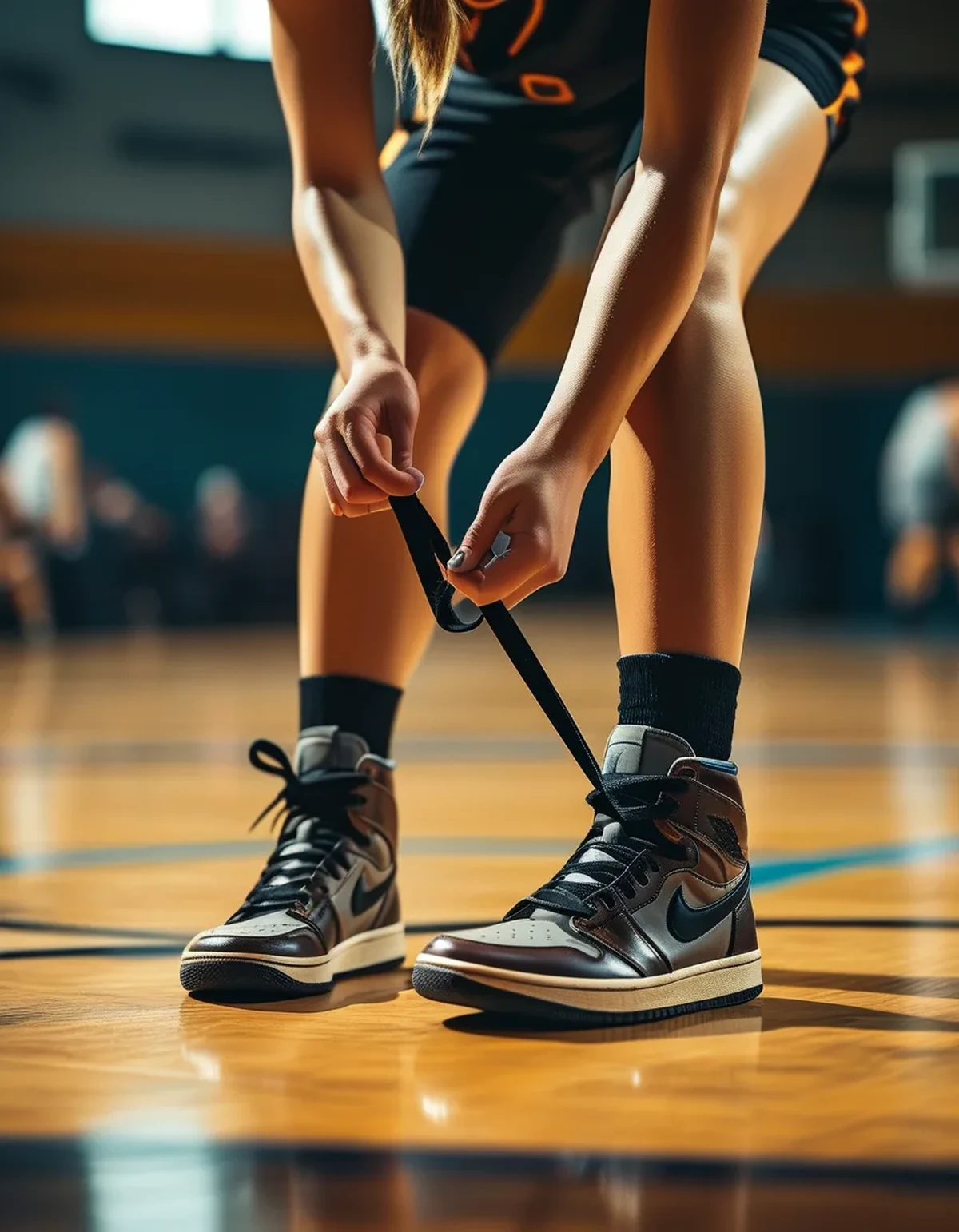
A high, snug ankle collar that locks the joint rather than just covering it. Loose collars look supportive but let the ankle roll before the shoe material engages — the fix is a collar that hugs on lace-up, not one that’s just tall.

5 Mistakes Tall Players Make With Basketball Shoes
- Buying a half-size up ‘for comfort’ — this adds heel slip, which increases roll risk on lateral cuts. 2. Choosing low-tops for speed — the ankle support tradeoff isn’t worth it if you have a sprain history. 3. Skipping the lace-lock technique at the ankle eyelets, which is what actually stabilizes the joint. 4. Ignoring outsole width — a narrower base under a tall frame reduces your stability margin on landings. 5. Replacing shoes only when the sole wears out, not when the ankle collar foam has compressed and stopped supporting.
Does taping or bracing help more than the shoe itself?
Taping adds proprioceptive feedback (you feel the roll starting sooner) but doesn’t replace mechanical support — the combination of a good high-top plus tape during recovery from a previous sprain outperforms either alone.
FAQ: Tall Athlete Ankle Support Questions, Answered
Do compression ankle sleeves help without a shoe change?
They help with proprioception and mild swelling but provide much less mechanical resistance to rolling than a proper high-top — think of them as a supplement, not a fix.
Is a wider shoe automatically more stable?
Only if the width is under the foot’s actual base, not just roomier toe box — a wide toe box with a narrow heel cup doesn’t add lateral stability.
How often should tall athletes replace basketball shoes for ankle safety?
Watch the ankle collar foam, not just the outsole — once it packs down and feels loose on lace-up (usually 40-60 hours of play), support has dropped even if the sole still grips.
TL;DR:
- Longer levers mean more torque on your ankle when you land
- A snug, high ankle collar matters more for tall players than for shorter ones
- Half-sizing up for comfort adds heel slip and roll risk
- Tape plus a good high-top beats either alone during sprain recovery Your ankle roll risk is mechanical, not bad luck — a shoe that actually locks the joint changes the odds.
Keep Reading
This article is for general informational and styling purposes only. Fit, sizing, and product availability may vary.
