Why Compression Gear Never Fits Right for Tall Athletes
Quick Answer: Compression gear relies on graduated pressure zones mapped to average limb proportions — when a taller athlete’s limbs are longer than the chart assumes, those pressure zones land in the wrong places, reducing both comfort and the actual compression benefit. Brands with tall-specific inseams or size-blind compression mapping fit far better.
Compression gear is more sizing-sensitive than regular activewear because it isn’t just about length — the graduated pressure has to line up with specific points on the leg or arm to work as intended.
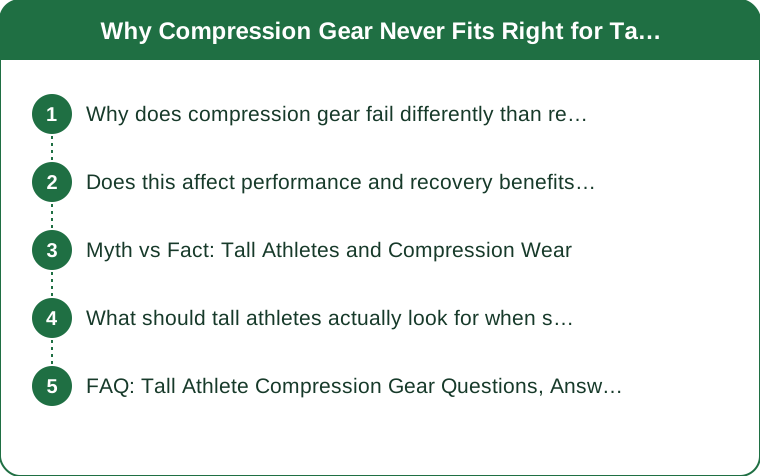
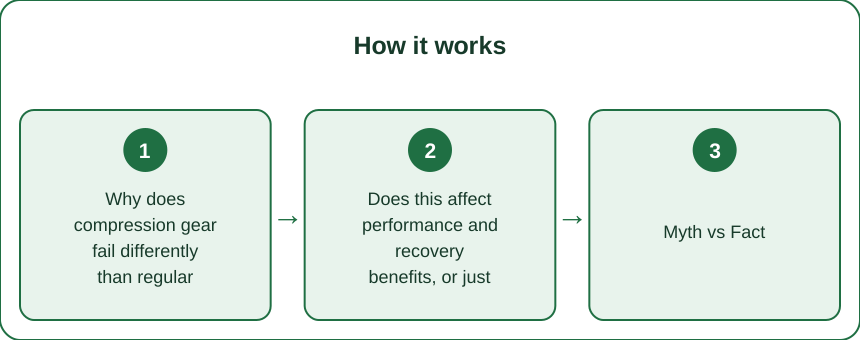
Why does compression gear fail differently than regular leggings for tall athletes?
Regular leggings that run short are mostly a length and coverage problem — compression gear that runs short means the graduated pressure zones (tightest at the ankle, looser higher up) land in the wrong places entirely, which can reduce circulation benefits or create uncomfortable pressure bands mid-calf instead of at the ankle. This is a functional problem, not just an aesthetic one.
A compression sleeve or tight built for an average-height frame essentially compresses the wrong section of a taller athlete’s leg.
Does this affect performance and recovery benefits, or just comfort?
Both — misplaced pressure zones can genuinely reduce the circulation and recovery benefits compression gear is designed to provide, since the graduated pressure gradient no longer matches the leg’s actual proportions. Athletes sometimes report feeling like compression gear ‘doesn’t do anything’ for them, when the real issue is that the product was never sized for their proportions in the first place.
This is a common and underdiscussed reason tall athletes give up on compression gear rather than seeking out better-fitted options.
Myth vs Fact: Tall Athletes and Compression Wear
Myth: All compression gear works the same regardless of height, since it’s stretchy. Fact: Stretch accommodates size, not the placement of pressure zones — a too-short compression garment stretched to fit a taller frame shifts those zones out of position.
Myth: A size up in compression gear solves the length problem. Fact: Sizing up usually increases circumference, not length, which can actually reduce compression effectiveness by making the garment too loose overall.
Myth: Tall-specific compression gear is just a marketing label with no real functional difference. Fact: Genuinely tall-cut compression gear repositions pressure zones to match longer limb proportions, which is a real functional difference, not just extra fabric.
What should tall athletes actually look for when shopping?
Brands offering dedicated tall inseams or limb-length options for compression products, rather than just extended overall garment length, are the most reliable fit solution. Reading product descriptions for where pressure zones are specifically mapped (ankle, calf, knee) and comparing that to your own proportions helps avoid a repeat of the same fit problem across different brands.
Some performance-focused compression brands also offer custom or made-to-measure options, which is worth the added cost for athletes who rely on compression gear regularly for recovery.
FAQ: Tall Athlete Compression Gear Questions, Answered
How can I tell if my current compression gear’s pressure zones are misplaced?
If the tightest sensation isn’t at your ankle, or you feel an uncomfortable band mid-calf instead of a gradual pressure decrease upward, the zones are likely shifted from where they should be.
Are tall-specific compression brands significantly more expensive?
Some are, but not universally — several mainstream athletic brands now offer tall or extended-length compression lines at comparable pricing to standard sizing.
Does this same issue apply to compression sleeves for arms, not just legs?
Yes, the same graduated pressure zone logic applies to arm sleeves, though the length mismatch is often less dramatic than with full-leg compression tights.
TL;DR:
- Compression gear’s pressure zones are mapped to specific points on the limb, not just overall length
- A too-short garment shifts those zones out of place, reducing both comfort and functional benefit
- Sizing up increases circumference, not length, and can make compression less effective
- Look for brands with dedicated tall inseams or limb-length options, not just longer standard sizing
If compression gear has never felt like it ‘does anything’ for you, proportional fit — not compression strength — may be the real issue.
See It in Motion
Seen here: Super High Waist Embossed Yoga Leggings with Inner Pocket — shop it on bubblelime.com
Keep Reading
This article is for general informational and styling purposes only. Fit, sizing, and product availability may vary.
